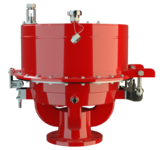
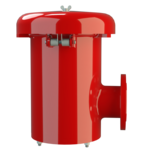
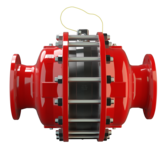
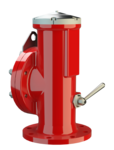
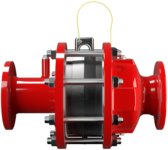
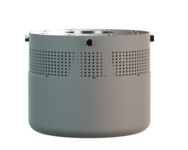
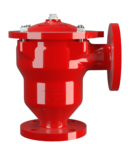
The PROTEGO® UB/DF diaphragm valve is a worldwide unique deflagration-proof and endurance burning-proof pressure relief valve combining the function of a dynamic and static flame arrester. It is primarily ...
PROTEGO® lift-actuated vent valves type AL-DK provide automatic venting of floating roof tanks when the floating roof is lowered onto its supports and the tank is either drained or refilled. When the float...
The deflagration- and endurance burning-proof PROTEGO® UB/SF-IIA1 type diaphragm valve is a state of the art pressure and vacuum- relief valve combining the function of a dynamic flame arrester. Worldwide ...
PROTEGO® lift-actuated vent valves type AL-DK-D provide automatic venting of floating roof tanks when the floating roof is lowered onto its supports and the tank is either drained or refilled. When the flo...
The deflagration-proof and endurance burning-proof PV/EBR-E type PROTEGO® valve is a highly developed combined pressure/ vacuum relief valve for high fl ow capacities with an integrated flame arrester that...
The in-line detonation flame arresters type PROTEGO® DA-SB are the newest generation of flame arresters. Based on flow and explosion dynamic calculations as well as decades of field tests, a product line w...
The deflagration- and endurance burning-proof PROTEGO® DE/S type device is a state of the art high velocity vent valve working on the principle of a dynamic flame arrester. It is primarily used as a device...
The in-line detonation flame arresters type PROTEGO® DAZ-S are unidirectional flame arresters of the newest generation. The unidirectional (effective on one side) devices protect potentially explosive ...
The PROTEGO® EF/V-IIB3 detonation-safe foot valve protects the suction line in a storage tank. The virtually maintenancefree device is installed at the end of the emptying line within the tank. During suct...
PROTEGO® DR/ES-V series uniquely combines the function of an in-line detonation flame arrester with the function of a pressure relief valve in one device. The device protects against deflagration and stabl...