BE/HK
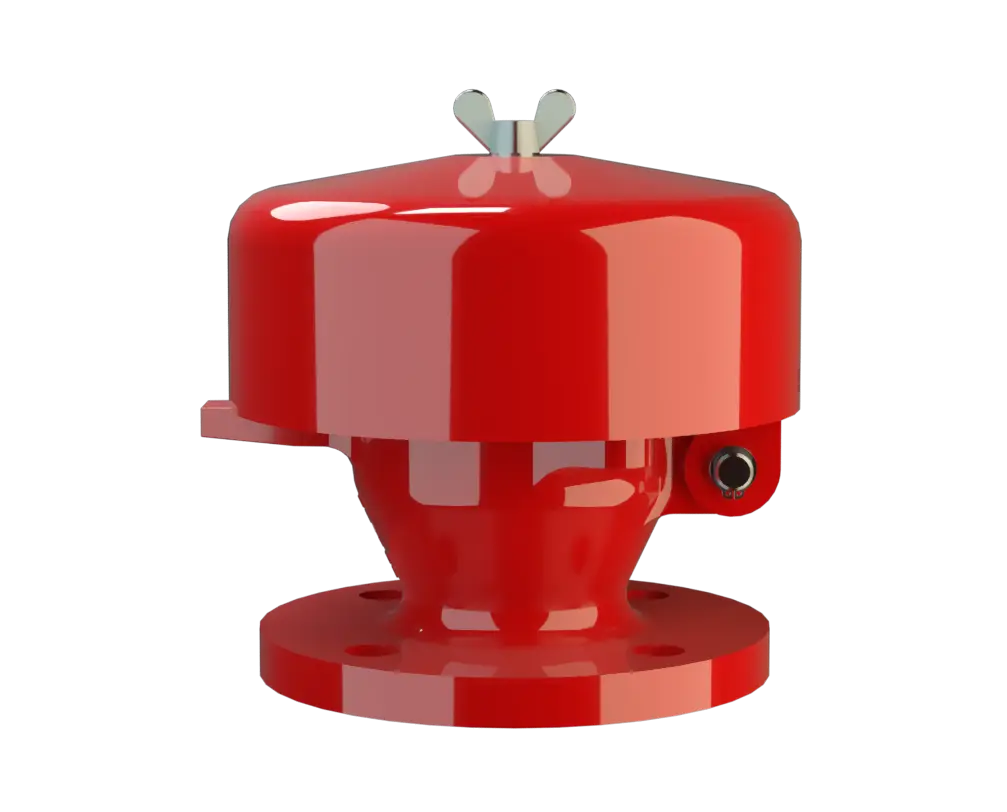
Deflagration Flame Arrester, endurance burning proof, End-of-Line
Features
Function and Description
Protection Against Atmospheric Deflagration and Endurance Burning
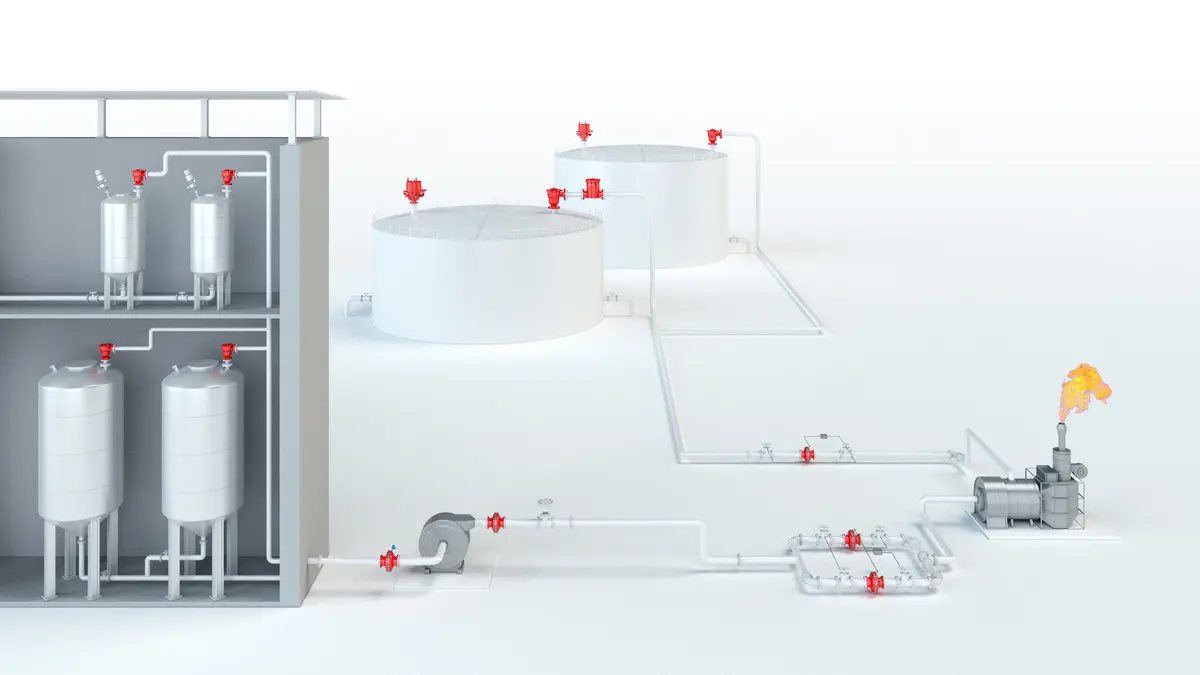
For many years the PROTEGO® BE/HK End-of-Line Deflagration Flame Arrester Corta-chamas à prova de deflagracão Flame arrester designed to prevent the transmission of a deflagration. It can be an end-of-line flame arrester or an in-line flame arrester. has been successfully used to protect vessels and process engineering apparatus which are not pressurized. The device Equipamento A device is a pipe component that influences the media flow by opening, closing, or partially shutting off the flow channel or by dividing or mixing the media flow. provides protection against flame transmission through atmospheric deflagration and stabilized flames which can burn for very long time on the Flame Arrester Corta-chamas Device fitted to the opening of an enclosure, or to the connecting pipe work of a system of enclosures, and whose intended function is to allow flow but prevent the transmission of a flame. Element surface, so called endurance burning. Main application area is on in- and out-breathing and vent lines, with the goal to prevent flame transmission caused by endurance burning or atmospheric deflagration from propagating into the vessel Recipiente Container or structural envelope in which materials are processed, treated or stored. or plant.

Main Component – PROTEGO® Flame Arrester Unit
The PROTEGO® BE/HK consists of a housing Corpo A housing is a solid shell, which surrounds a content, either protecting the content from external influences, or protecting the environment from the content. (1), a weather hood Capa protetora contra influências climáticas A weather hood is a cover to protect the internal components of a device from environmental influences. (2) and the PROTEGO® Flame Arrester Unit (3). During normal operation the metal weather hood is in a closed position. If a stabilized flame burns on the Flame Arrester Element surface, the fusible link (5), located in a center position, will melt and let the spring Mola A spring is a spiral of wire which returns to its original shape after it is pressed or pulled. loaded weather hood move into the open position. The PROTEGO® Flame Arrester Unit consists of two FLAMEFILTER® discs (4), which are installed in a FLAMEFILTER® casing. The FLAMEFILTER® gap size depends on the devices intended use.

For Explosion Groups IIA to IIB3
Detailing the operating conditions such as the temperature, explosion Explosão Oxidação brusca ou reação de decomposição que produz um aumento de temperatura, pressão ou de ambas simultaneamente. group and the composition of the fluid, enables PROTEGO® to select the best End-of-Line Deflagration Flame Arrester for your application. The PROTEGO® BE/HK Series End-of-Line Deflagration Flame Arrester is available for substances from explosion groups IIA to IIB3 (NEC groups D to C MESG ≥ 0.65 mm). In a modified design, this device is also available for Ethanol applications. The standard design can be used with operating temperature Operating temperature Temperature reached when the equipment is operating under design conditions. of up to +60°C / 140°F. Type-approved according to ATEX Directive as well as other international standards.
Dimensions
To select the nominal size Dimensão nominal The nominal size is an alphanumeric designation of size for components in a piping system, used for reference purposes, comprising the letters DN followed by a dimensionless integer that is indirectly related to the physical size of the bore or outside diameter of the connections, expessed in millimeters. (DN), please use the flow capacity charts on the following pages
| DN | 20 / ¾" | 25 / 1" | 32 / 1¼" | 40 / 1½" | 50 / 2" | 65 / 2½" | 80 / 3" | |
| a | 163 / 6.42 | 163 / 6.42 | 163 / 6.42 | 183 / 7.20 | 183 / 7.20 | 218 / 8.58 | 218 / 8.58 | |
| BE / HK-IIA | b | 180 / 7.09 | 177 / 6.97 | 177 / 6.97 | 190 / 7.48 | 190 / 7.48 | 200 / 7.87 | 200 / 7.87 |
| BE / HK-IIB3 | b | 180 / 7.09 | 177 / 6.97 | 177 / 6.97 | - | - | - | - |
Dimensions in mm / inches
Dimensions for deflagration flame arrester with heating jacket upon request
Material selection for housing
| Design | B | C |
| Housing | Steel | Stainless Steel |
| Weather hood | Steel | Stainless Steel |
| Flame arrester unit Flame arrester unit Flame arrester casing with FLAMEFILTER® set. | A | A, C |
Special materials upon request
Material combinations of flame arrester unit
| Design | A | C |
| FLAMEFILTER® cage | Stainless Steel | Stainless Steel |
| FLAMEFILTER® | Stainless Steel | Hastelloy |
| Spacer | Stainless Steel | Hastelloy |
Special materials upon request
Selection of explosion group
| MESG | Expl. Gr. (IEC / CEN) | Gas Group (NEC) |
| > 0,90 mm | IIA | D |
| ≥ 0,65 mm | IIB3 | C |
Special approvals upon request
Flange connection type
| EN 1092-1; Form B1 |
| ASME B16.5 CL 150 R.F. |
other connections upon request
Design Types and Specifications
There are four different designs:Special designs available on request
Flow Capacity Chart
The flow capacity charts have been determined with a calibrated and TÜV certified flow capacity test rig. Volume flow V in (m³/h) and CFH refer to the standard reference conditions of air ISO 6358 (20°C, 1bar). For conversion to other densities and temperatures refer to Sec. 1: “Technical Fundamentals”.