Características
Función y descripción
In- and Out-Breathing – Prevents the Ingress of Water and Dirt
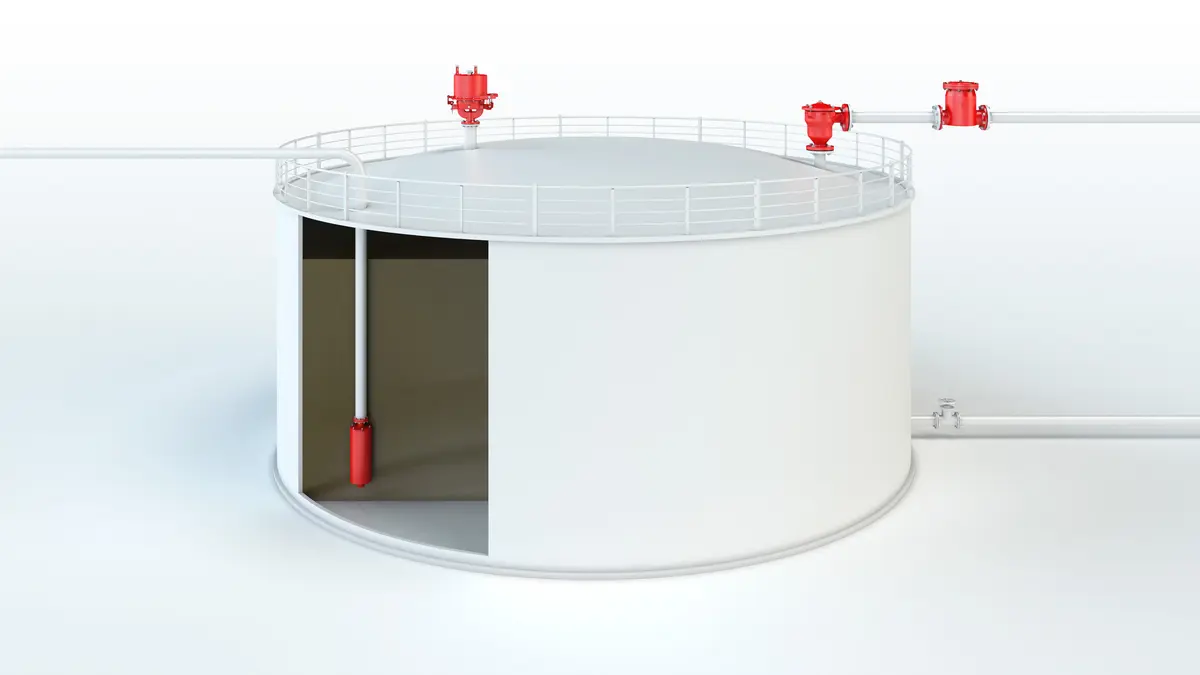
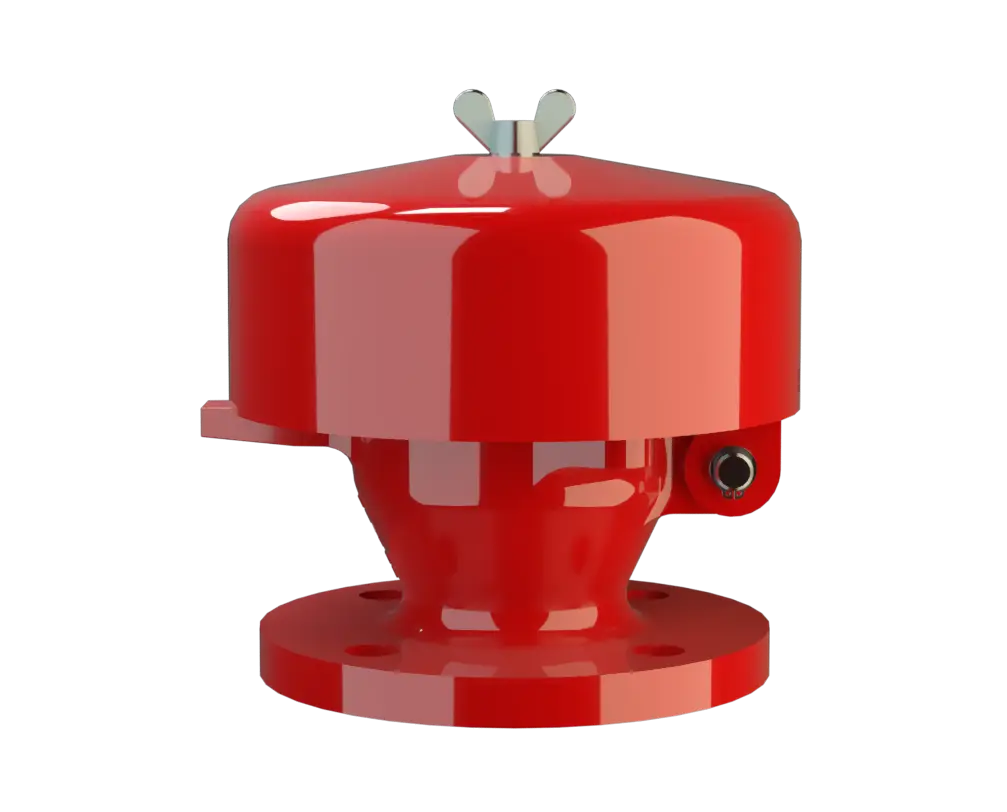
The PROTEGO® E/H0 vent cap allows vessels which are not pressurized to vent. This device prevents rain and dirt from entering the vent line. The EH/0 vent cap is not flame transmission proof. It is often used in combination with Detonation Detonation Explosion, die sich mit Überschallgeschwindigkeit fortpflanzt, gekennzeichnet durch eine Stoßwelle. Flame Arresters, when those are used in vent lines, installed at a position which creates a long run up distance from the end of the vent line to prevent endurance burning. The PROTEGO® EH/0 vent cap will then be installed at the end of that vent line to prevent particles or rain from entering the line.
Weather Protection Hood for Preventing Foreign Object Ingress and Animal Nesting
The vent cap PROTEGO® EH/0 main components are a housing (1), a weather hood (2) and a protection screen (3). The device is equipped with a fixed weather hood out of metal. The protection screen prevents particles or rain from entering the animals.
Dimensiones
To select the nominal size (DN), please use the flow capacity charts on the following pages
| DN | 20 / ¾" | 25 / 1" | 32 / 1¼" | 40 / 1½" | 50 / 2" | 65 / 2½" | 80 / 3" |
| a | 163 / 6.42 | 163 / 6.42 | 163 / 6.42 | 183 / 7.20 | 183 / 7.20 | 218 / 8.58 | 218 / 8.58 |
| b | 175 / 6.89 | 175 / 6.89 | 175 / 6.89 | 190 / 7.48 | 190 / 7.48 | 200 / 7.87 | 200 / 7.87 |
Dimensiones en mm / pulgadas
Selección de materiales
| Design | A | B |
| Housing | Steel | Stainless Steel |
| Weather hood | Steel | Stainless Steel |
Special materials upon request
Tipo de bridas de conexión
| EN 1092-1; Form B1 |
| ASME B16.5 CL 150 R.F. |
other types upon request
Modelo y especificación
Following designs are available:Special designs available on request
Diagrama de flujo volumétrico
Los diagramas de flujo volumétrico han sido determinados con un banco de pruebas de caudal calibrado y certifi - cado por TÜV. El flujo volumétrico V. en [m³/h] y el CFH se refi eren a las condiciones estándar de referencia de aire según ISO 6358 (20°C, 1bar). La conversión a otras densidades y temperaturas están referidas en el Vol. 1: “Fundamentos Técnicos”.