FA-I-V, FA-I-P
Flame Arrester for vacuum pumps, compressors and blowers
Caractéristiques
Fonction et description
Against the Propagation of Explosions
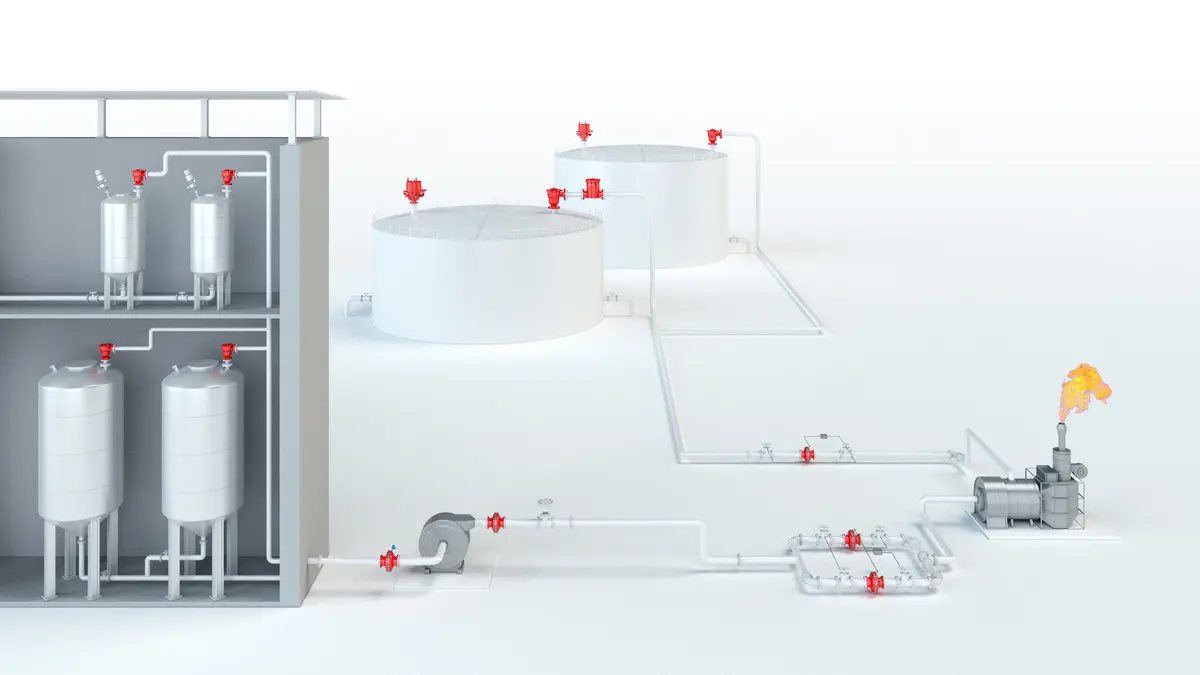
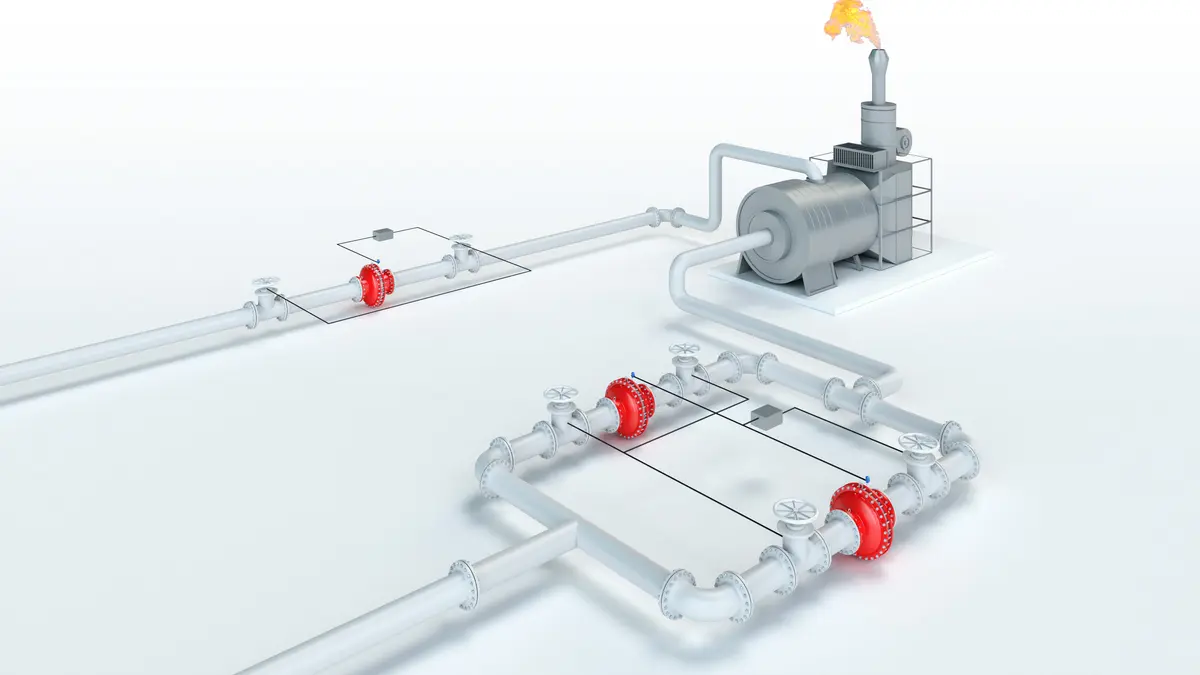
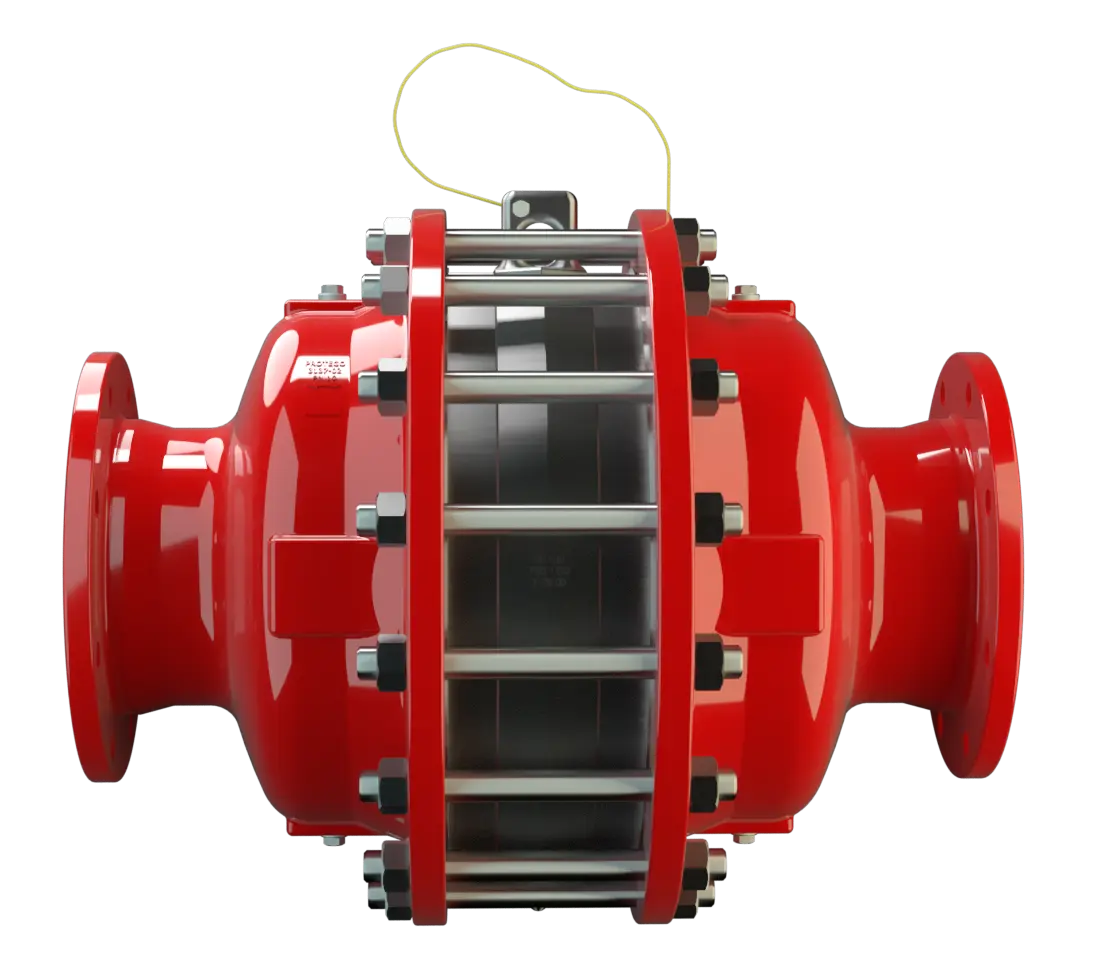
PROTEGO® FA-I-V and FA-I-P Flame Arresters Flame arrester Device fitted to the opening of an enclosure, or to the connecting pipe work of a system of enclosures, and whose intended function is to allow flow but prevent the transmission of a flame. are specifically designed for vacuum Vacuum Vacuum is the pressure in an enclosed space that is lower than the ambient pressure. pumps, blowers, and compressors. The high flow velocity in the small gaps of these machines can lead to undesirable ignitions within the housing Housing A housing is a solid shell, which surrounds a content, either protecting the content from external influences, or protecting the environment from the content. . One of the safest measures against explosion Explosion Abrupt oxidation or decomposition reaction producing an increase in temperature, pressure, or in both simultaneously. propagation are Flame Arrester Unit PROTEGO® flame arrester unit The PROTEGO® flame arrester unit is the main component of a flame arrester. It prevents flame propagation. that are installed on the vacuum and pressure Pressure (gauge pressure) Pressure for which the value is equal to the algebraic difference between the absolute pressure and the atmospheric pressure. side of the equipment Equipment Machines, appliances, fixed or mobile devices, control parts and accessories, and warning and prevention systems, whether separate or combined, intended for the generation, transfer, storage, measurement, control, and conversion of energy, and for the processing of materials, which have their own potential source of ignition and may cause an explosion. .
Unique Modular System for Optimized Flame Arresters
PROTEGO® FA-I-V devices for the vacuum side and PROTEGO® FA-I-P devices for the pressure side provide a unique modular design that gives every manufacturer of vacuum pumps or comparable devices the option of using optimized and adapted Flame Arresters. Our expert technical staff will assist you with the proper selection of the devices as well as execution of type testing.

Main Component – PROTEGO® Flame Arrester Unit
PROTEGO® FA-I-V and FA-I-P devices are symmetrical in design. The arrester essentially consists of two housing parts (1) and the PROTEGO® Flame Arrester Unit (2) in the center. The PROTEGO® Flame Arrester Unit is modular and consists of several FLAMEFILTER® (3) and spacers firmly held in a FLAMEFILTER® cage FLAMEFILTER® cage The FLAMEFILTER® cage is a housing for a FLAMEFILTER® set. . The number of FLAMEFILTER® and their gap size depends on the arrester´s conditions of use. PROTEGO® FA-I-V and FA-I-P Flame Arresters are available for explosion Explosion Abrupt oxidation or decomposition reaction producing an increase in temperature, pressure, or in both simultaneously. groups IIA to IIC (NEC groups D to B) and special gases such as Ethylene oxide.
Dimensions
Dimensions in mm / inches
Material selection for housing
| Design | A | B | C |
| Housing | Steel | Stainless steel | Hastelloy |
| Gasket | PTFE | PTFE | PTFE |
| Flame arrester unit Flame arrester unit Flame arrester casing with FLAMEFILTER® set. | A, B | B | C |
The housing can also be delivered in steel with an ECTFE coating Coating Coating is the application of a firmly adhering layer of shapeless material to the surface of a workpiece. .
Special materials upon request
Material combinations of flame arrester unit
| Design | A | C | D |
| FLAMEFILTER® cage | Steel | Stainless Steel | Hastelloy |
| FLAMEFILTER®* | Stainless Steel | Stainless Steel | Hastelloy |
| Spacers | Stainless Steel | Stainless Steel | Hastelloy |
* the FLAMEFILTER® is also available in the materials Tantalum, Inconel, Copper, etc. when the listed housing and cage materials are used.
Special materials upon request
Selection of explosion group
| FLAMEFILTER® gap | MESG | Expl. Gr. (IEC / CEN) | Gas Group (NEC) |
| 0.7 mm | > 0.90 mm | IIA | D |
| 0.5 mm | ≥ 0.65 mm | IIB3 | C |
| 0.3 mm | ≥ 0.50 mm | IIB | C |
| 0.2 mm | < 0.50 mm | IIC | B |
Flange connection type
| EN 1092-1; Form B1 |
| ASME B16.5 CL 150 R.F. |
Design Types and Specifications
There are fi ve different designs:Additional special devices available upon request
*Resistance thermometer for
device
Device
A device is a pipe component that influences the media flow by opening, closing, or partially shutting off the flow channel or by dividing or mixing the media flow.
group II, category (1) 2 (GII cat. (1) 2)